
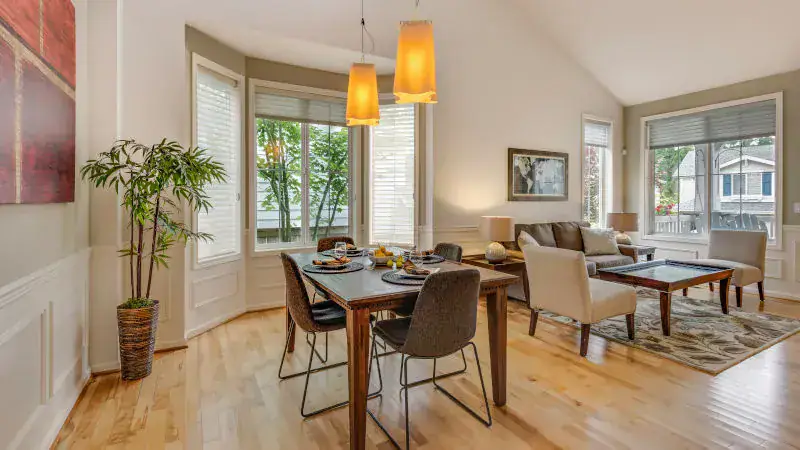
Color gets all the attention. Sheen, which is how shiny or flat a paint dries, gets ignored. That's a mistake, because sheen does as much for how a room feels and holds up as the color itself. The right sheen on the wrong wall can highlight every imperfection, smudge with every fingerprint, or leave a hallway looking dull and tired in six months. Here's how we think about sheen when we walk a home with a customer in Pensacola.
The Five Sheens, From Flat to Glossy
Most paint lines offer five sheen levels, each with a clear use case:
- Flat (matte): No reflection. Best for ceilings and low-traffic walls in rooms with imperfect drywall. Hides flaws beautifully, but doesn't clean well.
- Eggshell: Soft, very low shine. The most common interior wall finish. Easy to live with and reasonably wipeable.
- Satin: Subtle shine. More durable than eggshell, better for kitchens, bathrooms, kids' rooms, and high-traffic walls.
- Semi-gloss: Noticeably shiny. The standard for trim, doors, and bathroom walls because it stands up to scrubbing and moisture.
- Gloss: Mirror-like. Reserved for cabinets, accent doors, and built-ins where a hard, sleek finish is the goal.
Where We Recommend Each Sheen
Ceilings: Flat. Ceilings rarely get touched, and a flat finish hides the texture variations and minor imperfections that show up under raking light. Special ceiling paint also splatters less when it's rolled overhead.
Living rooms, bedrooms, and dining rooms: Eggshell. It's the sweet spot between flat's softness and satin's durability. Walls in these rooms see fingerprints and the occasional scuff, but not the daily abuse of a kitchen.
Hallways, kids' rooms, and entryways: Satin. These walls take the most punishment in a home. Backpacks, sticky hands, the dog's tail. Satin lets you wipe it all off.
Kitchens and bathrooms: Satin or semi-gloss. Moisture, splatters, and steam all call for a finish that resists staining and stands up to a damp cloth. Semi-gloss reads a little more formal and reflects more light, which can brighten a smaller bathroom.
Trim, doors, and baseboards: Semi-gloss. The contrast between flat or eggshell walls and a clean semi-gloss trim is what makes a room look intentional. It also wipes clean, which matters for baseboards in particular.
Cabinets: Satin or semi-gloss cabinet enamel. Standard wall paints aren't formulated for the daily wear cabinets take. We use cabinet-specific products on every cabinet painting project for exactly that reason.
Why Sheen Affects How a Room Feels
Higher sheens reflect more light, which can make a room feel brighter and a color feel cleaner. Lower sheens absorb light, which can make a color feel deeper and softer. A navy blue in eggshell reads as a calm, grounded color. The same navy in semi-gloss reads as a striking, modern color. Same paint, different room.
Higher sheens also show wall imperfections more clearly. If your drywall has dings, popped nails, or texture variations, a high-sheen paint will highlight every one. We always recommend addressing those issues with a proper drywall repair before a satin or semi-gloss finish goes on.
When in Doubt, Ask
Sheen is one of those decisions that's easy to second-guess. If you're not sure what to use where, we'll walk through it with you on the estimate. Send us a few details about the rooms you're considering and we'll come out for a free estimate on your interior painting project. Or call us at (850) 449-1919.